
Pet Odour in Carpets and Upholstery — What Actually Works
By Home Hero Services · Melbourne's Northern & Western Suburbs
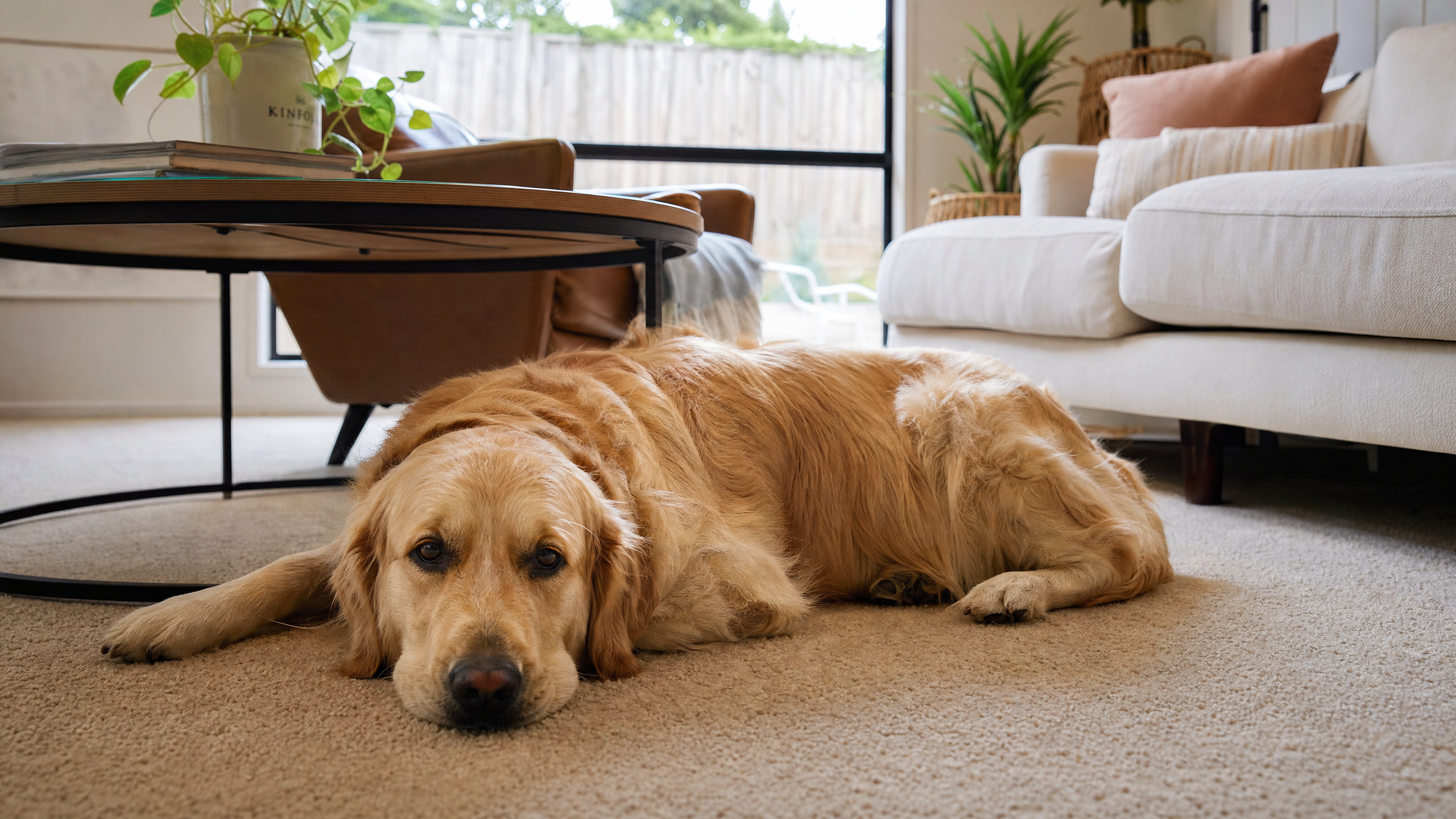
Pet odour that returns after cleaning is one of the most common frustrations we hear from customers. The carpet looks clean, the smell improves immediately after the job — and then a week later, particularly on a humid day, the odour is back. This is not a sign that the cleaning was inadequate. It is a chemistry problem, and understanding it makes a significant difference to what you do next.
This article explains why pet odour persists, what approaches actually help, and when professional carpet cleaning Melbourne is the right next step — and when it may not be enough on its own.
Why Pet Odour Persists After Cleaning
Pet urine contains uric acid. When urine dries, the uric acid forms crystals that bond with carpet fibres and backing. These crystals are not water-soluble — which means standard cleaning removes the surface contamination but leaves the crystals behind.
Heat and humidity cause these crystals to release odour compounds again. This is why a carpet can smell fine in dry conditions and then produce a noticeable odour on a warm, humid day — or after steam cleaning, which temporarily reactivates the crystals before they are extracted.
Standard hot water extraction alone does not fully address uric acid crystals. Enzyme pre-treatment — applied before steam cleaning — is the approach that targets the source. Enzyme solutions break down uric acid chemically, making it water-soluble so it can be extracted during the steam clean. The effectiveness depends on the concentration of contamination, how deeply it has penetrated, and whether the underlay has been affected.
What Actually Helps
Three approaches, in order of effectiveness:
Professional Steam Cleaning with Enzyme Pre-Treatment
This is the most effective approach for carpet and upholstery. Enzyme solution is applied to affected areas and allowed to dwell — the dwell time is critical; rushing this step reduces effectiveness. The area is then steam cleaned to extract the broken-down compounds. For carpet cleaning Northern Suburbs clients with pet odour concerns, we apply enzyme pre-treatment as standard on identified areas. Results depend on contamination depth and whether the underlay has been affected.
Enzyme-Based DIY Products (For Fresh, Surface-Level Contamination)
Enzyme-based products available at pet stores can be effective for fresh, surface-level contamination if used correctly. The key is dwell time — the product must be left on the affected area for the duration specified on the label, not wiped up immediately. Do not use bleach or ammonia-based products on pet urine areas. Bleach can set the stain and damage fibres; ammonia is chemically similar to urine and can attract pets back to the same spot.
Ventilation and Drying
Effective for mild, surface-level odour — particularly general pet smell from dander and coat oils rather than urine. Opening windows, running fans, and ensuring carpets dry thoroughly after any cleaning are all useful. Not effective for set contamination or repeated urine events in the same area.
When Professional Cleaning May Not Be Enough
This is the section most cleaning companies do not include in their content — but it is the most important one for setting honest expectations.
If urine has saturated the underlay — the foam or felt layer beneath the carpet — surface cleaning will not fully resolve the odour. The underlay acts as a reservoir, holding uric acid crystals that continue to release odour regardless of how well the carpet surface is cleaned. In these situations, underlay replacement is the only complete solution.
Signs that underlay saturation may have occurred:
- →Odour that persists or returns after multiple professional cleans
- →A large area of repeated contamination from the same pet over an extended period
- →Visible staining on the underside of the carpet when it is lifted
- →A strong odour that is noticeably worse in warm or humid conditions
If you are in this situation, a professional clean will still improve the carpet surface — but we will tell you honestly at the assessment if we believe the underlay is the primary issue. Underlay replacement is a separate job that involves lifting the carpet, replacing the underlay, and re-laying the carpet. It is a more significant intervention, but it is the correct one for severe cases.
Pet Odour in Upholstery
The same principles apply to fabric sofas and upholstered furniture. Professional couch and upholstery cleaning Melbourne with enzyme pre-treatment can significantly improve freshness for most pet odour situations. For upholstery cleaning Melbourne clients with pet odour concerns, we assess the fabric type and contamination level before starting.
The limitation is foam saturation. A sofa that a pet has used repeatedly as a toilet over months or years may have uric acid crystals deep in the foam cushioning. Surface cleaning will improve the smell, but if the foam core is saturated, the odour will return. In these cases, cushion replacement or reupholstering is the complete solution — professional cleaning is still worthwhile as a first step, but it is honest to acknowledge the limitation.
Have a Pet Odour Problem?
The first step is a professional assessment. Call or SMS and describe the situation — how long it has been present, which areas are affected, and whether you have noticed it returning after previous cleaning. We will give you an honest view of what is achievable before you book.